
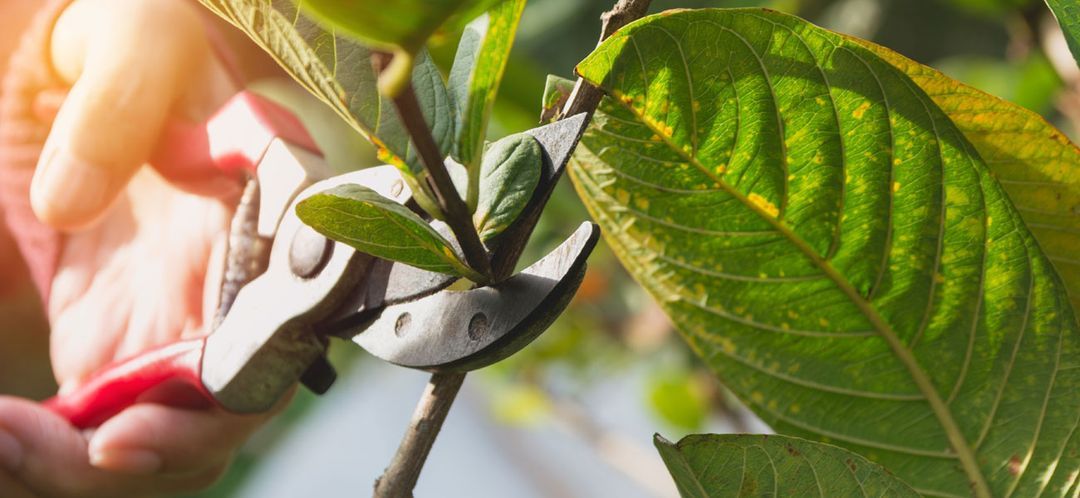
If you’ve ever looked out at your yard and wondered whether it’s time to trim something back — or maybe grabbed the hedge trimmers and just went for it — this one’s for you. Knowing when and how to prune your trees and shrubs makes a bigger difference than most people realize. Do it right and your plants stay healthy and look great. Do it at the wrong time and you can set them back for an entire season.
We put together this guide to walk Raleigh-area homeowners through the basics — when to prune, what to watch out for, and the right technique so you’re not doing more harm than good.
Proper Timing
- Cut in the Cold
- As a general rule, late winter is the best time for pruning most plants. Just remember the slogan: “Cut in the Cold.” For North Carolina, February is a great month for this work. In the Raleigh and Wake County area, which sits in USDA Hardiness Zone 7b, late February is the sweet spot — after the bulk of frost risk has passed but before new growth kicks off.
- What’s special about the winter? There are several factors at play that make the winter months perfect for pruning. First of all, plants are in a state of dormancy during the cold of winter. During dormancy, deciduous plants have dropped their leaves, exposing their branch structure to allow easier visibility when deciding what to remove. Without the added weight of those leaves, the branches will also be easier to untangle from the plant when removing, causing less damage to the remaining stems.
- Another factor during the winter is that both deciduous plants and evergreens have significantly less fluid flowing through their systems. This results in less stress on the plant when wounded, and less sap being exposed because of those wounds. Sap attracts the undesirable attention of insects, which would cause more wounds and disease.
- What to Watch Out For When Pruning in Winter
- Despite all of these advantages, there are a few plants for which it is best to avoid winter pruning, mainly for ornamental reasons. Plants that are the first to bloom in the spring have formed the buds for those flowers during the fall. If you prune them during the winter, you will be cutting off those buds and losing those flowers. This does not harm the plant, but it may affect your desired outcome for the following spring, so you should be aware of this before pruning. These plants include cherry trees (Prunus sp.), red buds (Cercis sp.), forsythia (Forsythia sp.), dogwoods (Cornus sp.), azaleas (Rhododendron sp.), and camellias (Camellia sp.).
- What about pruning needs during the rest of the year?
- Any gardener will be able to find pruning needs in the landscape during the other three seasons. Knowing what plants should be pruned at what times is typically determined by the plants’ flowering and growth habits. We recommend consulting pruning calendars made by trustworthy green industry professionals who have already asked all the necessary questions for each plant to determine the right timing. Below is a simple pruning calendar that we use here at Edison Landscaping. It displays proper pruning months for 25 common ornamental landscape plants in North Carolina.
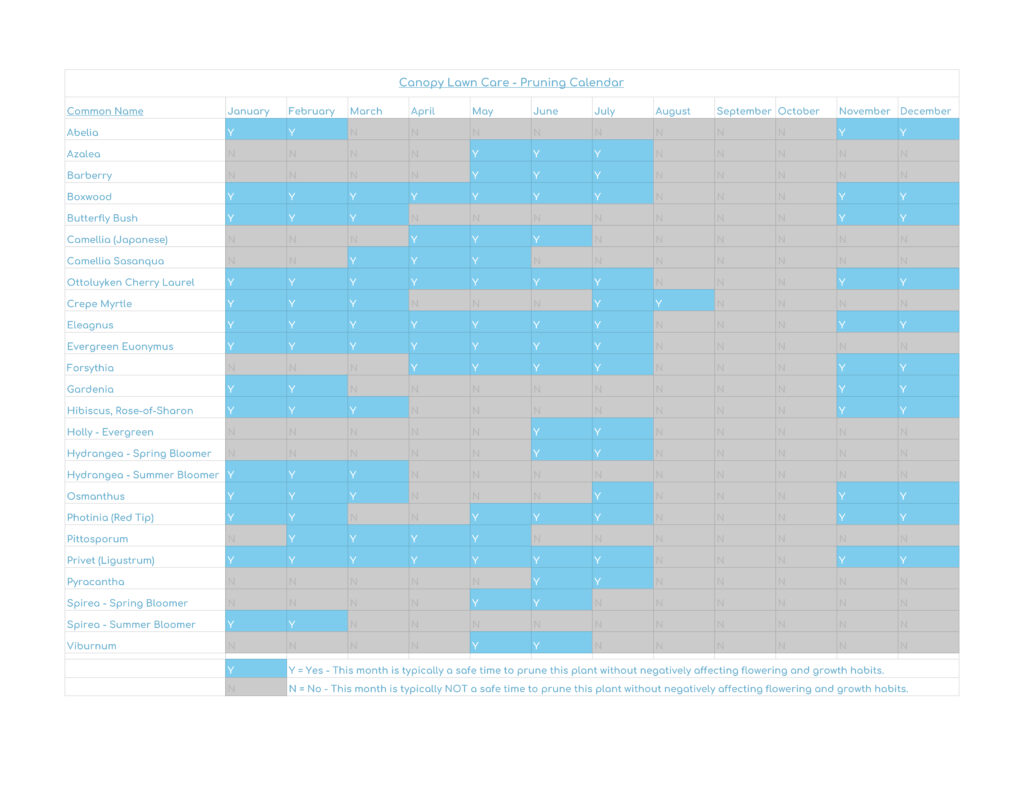
In case you don’t find what you’re looking for on this calendar, we have included a few other resources that we have found useful thanks to the help of our friends at NC State University.
Proper Technique
Before you do anything, remember that you can always cut more off later, but you can never undo a cut. Every cut is final, so take your time. If you don’t feel confident about a certain cut, leave it for the moment and come back to it later with fresh eyes. Also remember that the plant needs enough foliage to fuel its recovery from whatever cuts you make. Never remove more than one third of the plant’s existing structure. Obviously, there are exceptions, but please be conservative unless your goal is a rejuvenative hard cut-back. Always start the pruning on any plant by addressing the “3-D’s” first: Dead, Diseased, and Damaged plant material. Any time you prune dead or diseased plant material, it’s a good idea to clean your pruning tools with rubbing alcohol or Lysol before moving to other plants. This will help prevent the spread of any diseases that are present in the wood you’ve cut.
- Think about the future:
- Growth
- Anytime you cut a branch, the bud that is next on the stem closest to the cut will be the bud that receives most of the energy that was originally ear-marked for the entire branch that was removed. That bud will grow the fastest and therefore be the main initiator of how that portion of the plant will look in the coming growing seasons. When cutting a stem, think about where that last bud is located and what direction it is facing. For example, if you want to minimize the possibility of crossing branches, choose a bud that is facing away from the interior of the plant.
- Healing
- When you cut a stem off, cut it at a 45 degree angle that matches the direction of the chosen bud. Be sure not to leave a long stem protruding past the location of the bud — this will prevent fast and effective healing of that wound. Each branch or stem has a group of cells at its base called the “branch collar.” When cutting any limb off, cut right at the edge of the branch collar following its angle. Avoid cutting into the branch collar as this damages the plant’s ability to grow new cells over the wound.
- 3-Cut Method
- For any stems that require a saw for removal, use the 3-cut method to avoid the branch tearing bark as it falls.
- The first cut should be on the under-side of the stem, about 6″ out from the branch collar, going only ¼ to ⅓ of the depth of the stem.
- The second cut starts from the top of the stem about 1-2″ further out from the first cut, cutting all the way through until the branch drops. This leaves a 6″ nub that must be removed by the third cut.
- The third and final cut follows the angle of the branch collar, leaving the wound in the best condition for fast and effective healing.
- Growth
Ready to Schedule Your Shrub and Tree Pruning?
Edison Landscaping provides professional pruning and trimming for homeowners and HOAs across Raleigh, Cary, Apex, Morrisville, and the greater Wake County area. Contact us today to schedule a consultation.