
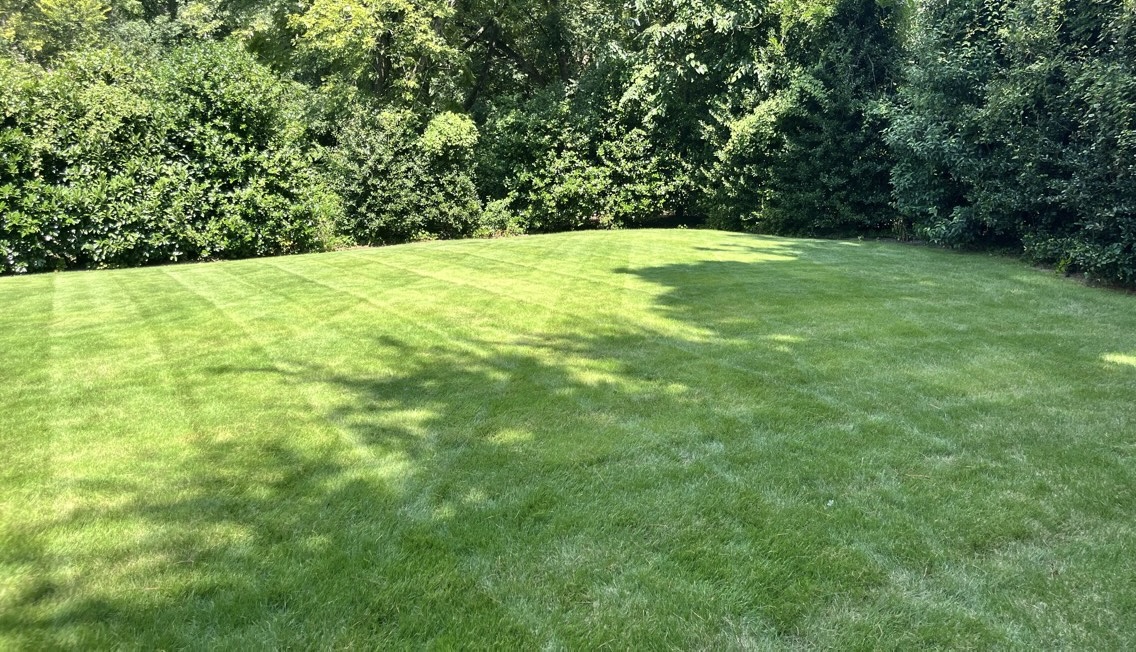
If you have a fescue lawn in Raleigh, Wake Forest, or Cary, you’re dealing with two problems this summer: drought stress turning your grass brown, and Stage 1 mandatory water restrictions limiting when you can irrigate. The good news is as of today, you can still water. The better news is that what you do this fall matters far more than what you do right now.
The City of Raleigh activated Stage 1 mandatory water-use restrictions on April 20, 2026, and they remain in effect as of today (City of Raleigh Stage 1 Drought Restrictions: https://raleighnc.gov/alerts/stage-1-water-restrictions-place-drought-continues). Under those restrictions, in-ground irrigation is limited to one day per week based on your street address — odd-numbered addresses water on Tuesdays, even-numbered on Wednesdays — and only between midnight and 10 a.m. This drought has been called the driest groundwater recharge season since rainfall records began at RDU in 1895, with Falls Lake dropping well below its seasonal pool.
The restrictions are enforceable, but they don’t mean your lawn has to die. NC State Extension’s tall fescue maintenance calendar recommends watering dormant fescue at least once every three weeks during drought to prevent crown dehydration and plant death. (NC State Extension Tall Fescue Maintenance Calendar: https://content.ces.ncsu.edu/tall-fescue-lawn-maintenance-calendar) One deep watering per week under the current restrictions meets that threshold for most soils. The goal right now isn’t green grass — it’s keeping the crowns alive long enough to recover in fall.
Dormancy this summer is not a crisis. Tall fescue is a cool-season grass living on the southern edge of its comfort zone in the Raleigh area. It browns in summer heat and comes back in fall. What does become an issue is compacted, depleted soil — and after months of heat and restricted watering, that’s exactly what most Wake County fescue lawns are heading into fall with.
That’s why the most important thing you can do right now isn’t fight the drought. It’s plan your fall response. After a summer like this one, fescue lawns in Raleigh, Wake Forest, and Cary are going to need more than a standard aeration and overseeding in September. They’re going to need topdressing. NC State Extension recommends following core aeration with overseeding and a quarter-inch layer of compost, which improves seed-to-soil contact, restores organic matter to clay-heavy Piedmont soils, and supports germination after a rough summer. (NC State Extension, Lawn Care in the Fall: https://union.ces.ncsu.edu/2021/08/lawn-care-fall/)
The fall window for fescue in Wake County is narrow — mid-September through October, when soil temperatures are still warm but air has cooled enough for seed to establish before winter. Take a look at our service offerings to see what a full fall renovation includes (https://www.edisonscapes.com/services/landscaping-solutions/). Water on your assigned day and water deeply. Then get on our fall schedule before September — demand after a drought year like this will be high (https://www.edisonscapes.com/contact/projects/).